Thursday, October 26, 2006

DaimlerChysler Forum – Cooperation of Policy and Business in the Transatlantic Dialogue

Ambassador William R. Timken, Jr.

Berlin | Petersberg, Steigenberger Grandhotel - - Thank you, State Secretary Hintze, for your introductory remarks. Thank you, Rob Liberatore, Dr. Spoeri and DaimlerChrysler for organizing and hosting this important and timely event. I could not think of a more fitting title for this discussion forum, nor could I think of a better company to host it. DaimlerChrysler is an example of the significance and importance of the transatlantic relationship and how our relationship has been transformed as the world has transformed.

This transformation – spurred by the end of the Cold War – has brought the world closer together through the spread of more open and highly integrated markets. No where else in the world has this integration happened faster and more intensely than between Europe and the United States. The “glue” that was the Cold War, which held our nations together for over four decades, has been replaced with increased investment, deeper economic integration and more corporate partnerships. Despite constant talk of the rise of the Asian market and other emerging markets, Europe and the U.S. are still each other’s most important commercial partner and number one investment location.

The transatlantic economic relationship between Germany and the United States provides a perfect example: foreign direct investment flows between the U.S. and Germany total over $290 billion. There are over 3,250 German companies in the U.S. with an annual turnover of $429 billion and over 1,250 U.S. companies in Germany with a turnover of $214 billion. These firms provided over 1.25 million jobs in our two countries. These companies harness the benefits of opened markets brought about global economic integration. In doing so, they help increase the prosperity of our respective countries and further deepen the most important trade relationship in the world.

The economic relationship – the one that brings the world’s two largest, most affluent economies together – has, in effect, become both driver and anchor of the new transatlantic relationship. By the driver I mean the continued and ever-increasing level of investment and trade between the EU and United States. Forty percent of world GDP and over one-third of global trade take place between the EU and the U.S. The result is increased prosperity on both sides of the Atlantic.

Transatlantic economic ties have also anchored our relationship. They have helped us move ahead and maintain our purpose when disagreements over the Iraq War made other parts of the relationship difficult. That period underscored not only the strength of the transatlantic relationship, but also made apparent where a key source of strength lies – in the integrated, mutually reinforcing economic relationship. As an excellent DaimlerChrysler-supported study on the transatlantic economy noted, even though U.S.-German political relations suffered during the Iraq War, U.S. companies still poured $7 billion in investments into Germany in 2003. It was also a record year for transatlantic trade flows, growing by 7% year-on-year.

Politicians who ignore the need for a strong transatlantic partnership do so at their own nations peril in the future.

Globalization is unavoidable! Globalization is consumer-driven and something that has existed long before the fall of the wall that was right outside this building. Globalization is about choice, about seeing things changing elsewhere and wanting to be part of that change. These things – whether they are ideas, new manufacturing techniques, services or consumer goods – have been made accessible through the opening of markets and revolutions in technology and communication. Globalization has transformed the way people see the world. It has spurred competition and innovation and provides opportunities for not an elite few, but for the global population. It takes foreign relations out of chancelleries and legislatures and makes it part of the lives of individuals around the world.

By taking advantage of the benefits globalization has to offer – in terms of market access, increased investment and information flows, and innovation – companies and their employees have a vested interest, a real stake, in ensuring the continued success of the transatlantic relationship.

As most of you know, I have a bit of experience with running a company that benefited greatly from the transatlantic relationship. We realized that if markets opened and the global economy was changing, we needed to change right along with it. This required thinking about how to run a company more efficiently, to empower the individual to make decisions – from the lowest to the highest level. It meant breaking down barriers within the company – collapsing management silos and eliminating stove-piping. We couldn’t allow ourselves to be the greatest hindrance to competing in these new markets.

What I always thought important was our company’s ability to form a connection between our employees in the U.S. and our employees in Europe – to empower the individual. Information-sharing had to begin within the company itself, to show that the mission of the Timken Company transcended continents and that we all had a part to play in its success. We used worldwide company news letters to report on events or developments happening throughout our plants the world over. The information and technology revolution has only deepened and spurred more exchanges of communication and ideas. While it may sound simple to post a company newsletter or have an electronic bulletin board, the dissemination of information makes it quite clear that we are all in this together and each employee’s efforts – whether in Germany or Ohio – plays a role in the company’s bottom line.

In effect it makes a difference in the prosperity and well-being of every employee and family. Those workers can also carry that information to their friends and neighbors and further build international understanding.

The Europe and the U.S. still have the wherewithal to compete globally. In fact, Europe and the U.S. continue to be destinations of choice for multinational corporate expansion. Companies are putting more emphasis on high-value areas like research and development. They are moving closer to their markets, suppliers and decision-makers, rather than focusing solely on low-cost production. That shows that the U.S. and the Europeans are still well-placed not only to compete, but to succeed in today’s global economy. And of course, we have huge markets.

As I mentioned earlier, having a vested interest in transatlantic success is important, but you also need to empower your employees so they can exploit the advantages of globalization. As the world becomes more integrated, the importance of having employees who can adapt to this world -- who have the necessary skill sets to compete -- is essential. This challenge lies at an important intersection for government and business interests. It brings into further focus the importance economics plays on foreign policy. Weak economic growth in the EU means lost opportunities for transatlantic trade. As Daimler-Chrysler’s study on the transatlantic economy highlights, annual growth of just 3% in Europe would create a new market the size of Argentina.

President Bush has stated on more than one occasion that the most effective method for generating new, high-quality jobs, and higher living standards, is to develop the skills and technologies that promote economic competitiveness. Business and government both have a responsibility to provide education and training opportunities to keep the workforce competitive. Governments around the world must also continue to open their markets and support education systems that will allow their citizens to be part of this dynamic global economy. Governments also need to unleash the potential of businesses -- through tax cuts and less restrictive labor regulations.

To continue integrating the world economy – and halt protectionism – a serious effort needs to be made to save the WTO’s Doha Round. A successful Round is essential to companies, farmers, workers and consumers around the world. Free trade is at the center of President Bush's vision of a world of expanding economic opportunity, prosperity and freedom. Completing Doha is one of his top priorities. While bilateral or regional free trade agreements can be helpful, they can in no way replace the benefits of a comprehensive global, multilateral free trade system. The opportunities that a successfully concluded Doha Round provide are too great to let slip away. Let’s not let this once-in-a-generation chance pass us by. There is still time to reach a conclusion to the current Round, but your voices must be heard. It is time for European business to make it known to their politicians that failure in the current trade negotiations is unacceptable and it is time for all WTO members to seize this last chance to make the right choice about our common futures.

I would close by asking you to think about what you and your company can do to make the public aware of and supportive of this deeper relationship and the benefits it brings. An even deeper transatlantic relationship will ensure that this success continues, as we build on our strong partnership for the future. Thank you

Wednesday, October 25, 2006

DCX showing 4.2-liter Cummins diesel in concept Jeep at SEMA

Randall Halcomb | AUTOBLOG.COM - - The wait may finally be over. At SEMA next week, Jeep will be showing a concept Wrangler Unlimited dubbed 50 JK. The Mopar Skunkwerks team beefed up this hardtop four-door Wrangler concept with a four-inch lift, 35-inch tires, and Dana 44 axles. The real beef comes from a new Cummings 4.2-liter V6 diesel under the carbon-fiber hood. The concept will also feature GPS and a full saddle leather interior.

We've been patiently waiting for any hint that DaimlerChrysler will actually put a small diesel into the new Wrangler. There is something magical about a smaller factory off-road vehicle with a diesel engine, straight axles, and the option to remove the top and fold down the front window. If we lived in other parts of the world, this would be a fantasy already fulfilled. Now, with this concept rendering staring us in the face, the dream is finally going to come true for us in the U.S. The quesiton is, how long before we can walk down to a Jeep dealer with our check books out and get a stump-pulling diesel Wrangler of our own?

[Source: AutoblogGreen]

2007 Automotive PACE Award Finalists: Webasto Glas ProTec


All Cars, All the Time - - In the never ending search for, as one glass supplier called it “openity,” the folks at Webasto have created a new, “gentle” glass for roof installations. Webasto describes Glas ProTec (yes, they spell glass minus one s) thusly:

The two sorts of glass predominantly used in car production today are the single-pane safety variety (SPSG) and laminated safety glass (LSG). Webasto took up the challenge of combining the positive characteristics of SPSG and LSG and developing additional desirable functions. SPSG is stable and yet elastic while LSG remains laminated and does not splinter in the event of damage. Webasto Glas ProTec basically comprises glass pane, foil and a special bonding. In the event of external impact leading to breakage of the glass, the resultant shards of glass are kept in the roof by the foil, so the roof’s smooth, elastically stable inner surface remains in place.

In a nutshell, you've got a glass that is lighter in weight, but still offers good protection from broken bits of glass should you crack up your new ride.

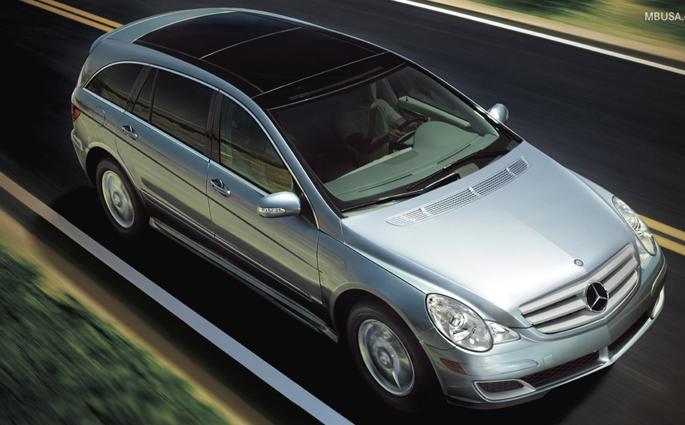
Glas Pro Tec debuted on the Mercedes R and S Class vehicles.

DaimlerChrysler Smart ForTwo update


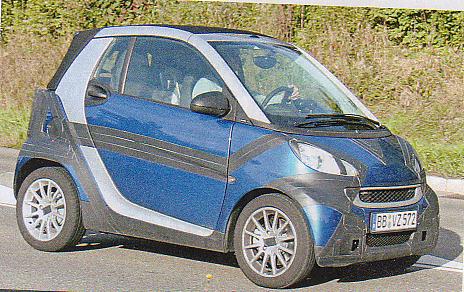
All Cars, All the Time - - While we all eagerly await the official pictures of the next generation smart fortwo coupe in November, here are a few tidbits that I’ve strung together to keep the fires burning.

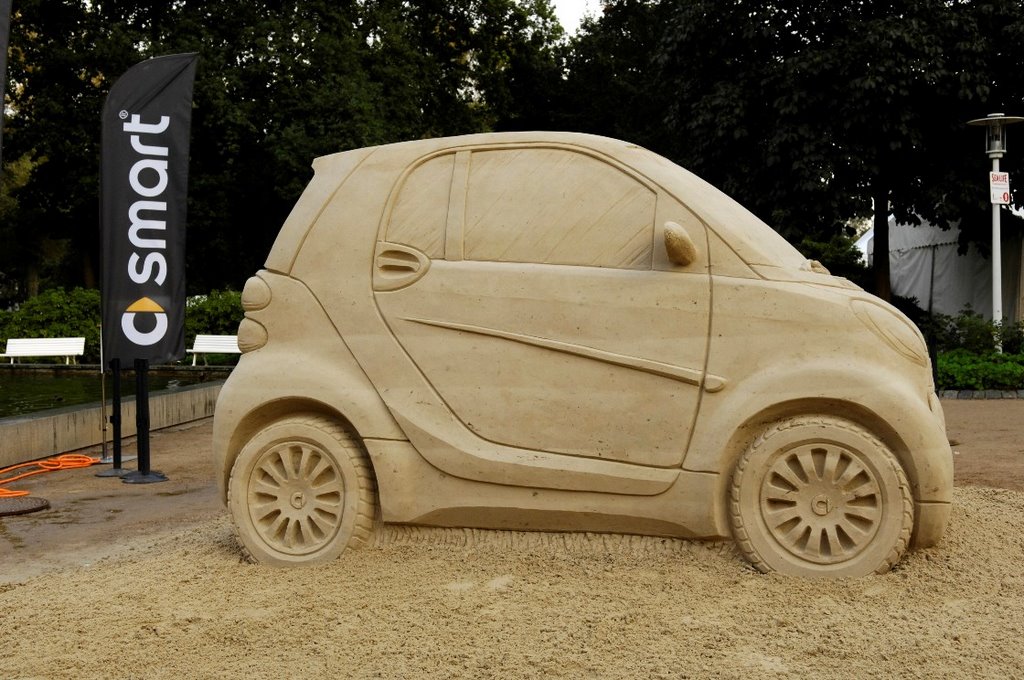
Firstly, here is a shot of a next-gen coupe going through its paces with minimal camo. For comparison I’ve got the sand sculpture photo beneath it.

Next, the interview that I mentioned previously on Autoline Detroit, you can watch it here, is partially available in transcribed form at TCC and you can check the transcript out here.

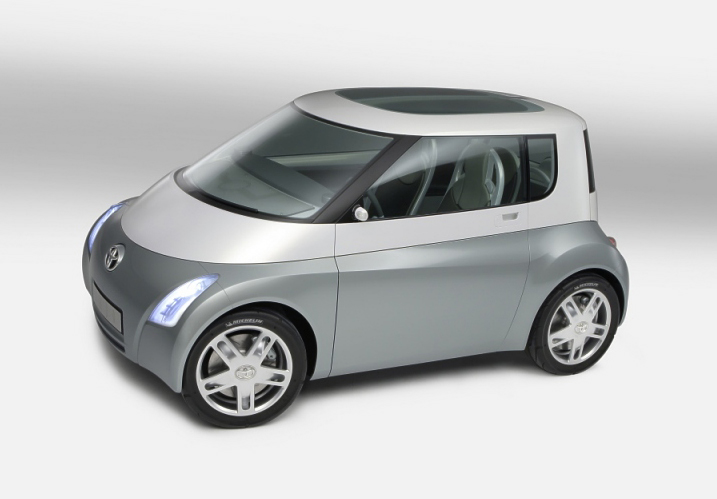
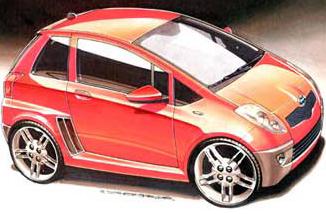
Thirdly I have some additional information about the upcoming fortwo competitor from Toyota. You first saw the Edmunds sketch and now Auto Express is reporting that the Toyota model will take its styling cues from the Endo concept. I’ve tacked on the Edmunds sketch for comparison’s sake. One of the interesting details about the Toyota model is that it will supposedly seat four passengers instead of the smart's two. That could make to Toyo a more practical car in essentially the same footprint. However, the smart really is about "unique style" as opposed to ultimate practicality so it will be interesting to see just how stylish Toyota's product will be.

DaimlerChrysler Third Quarter overall Profit

STUTTGART (AFX) - DaimlerChrysler AG posted third quarter profits well ahead of forecasts, as unexpected strength at the company's Mercedes and truck businesses more than offset anticipated steep losses at Chrysler.

Third quarter operating profit slid to 892 mln eur from 1.838 bln for the same period last year, but the figure was well ahead of the 591.2 mln eur forecast made by analysts polled by AFX News.

Trademark update: Chrysler Nassau

Mark Image

Word Mark NASSAU
Goods and Services IC 012. US 019 021 023 031 035 044. G & S: MOTOR VEHICLES, NAMELY CARS, TRUCKS AND SPORT UTILITY VEHICLES
Standard Characters Claimed
Mark Drawing Code (4) STANDARD CHARACTER MARK
Design Search Code
Serial Number 78877458
Filing Date May 5, 2006
Current Filing Basis 1B
Original Filing Basis 1B
Published for Opposition November 28, 2006
Owner (APPLICANT) DAIMLERCHRYSLER CORPORATION CORPORATION DELAWARE CIMS 483-02-19 1000 CHRYSLER DRIVE AUBURN HILLS MICHIGAN 48326
Type of Mark TRADEMARK
Register PRINCIPAL
Live/Dead Indicator LIVE

Trademark Status: Dodge Avenger


(words only): AVENGER

Standard Character claim: Yes

Current Status: Final review prior to publication has been completed, application will be published for opposition.

Date of Status: 2006-10-19

Filing Date: 2006-04-13

The Information will be/was published in the Official Gazette on (DATE NOT AVAILABLE)

Transformed into a National Application: No

Registration Date: (DATE NOT AVAILABLE)

Register: Principal

Law Office Assigned: LAW OFFICE 106

Attorney Assigned:
LAVACHE LINDA M Employee Location

Current Location: L6X -TMEG Law Office 106 - Examining Attorney Assigned

Date In Location: 2006-10-19

Chrysler digs in to fight Asian rivals

David Gow in Brussels
Wednesday October 25, 2006
Guardian Unlimited


Chrysler, America's third-largest car company, is to start a savage cost-cutting programme and shift towards more fuel-efficient models to halt mounting losses that hit €1.16bn (£780m) in the third quarter.

Chrysler's losses, prompted by a 26% fall in sales and a price war, dragged down operating earnings at parent group DaimlerChrysler to €892m compared with €1.84bn in the same quarter a year ago, it was confirmed on Wednesday.

Daimler, which owns 15% of Airbus parent EADS, said delays to Airbus's A380 superjumbo would shave €200m off earnings this year, but reaffirmed its forecast of €5bn for the full year thanks to renewed vigour at Mercedes, its trucks division and financial services.

EADS delivered €247m profits to the cars group.

The plight of Chrysler, hailed last year as a turnaround success, underlines the scale of the problems faced by the US auto industry in the face of surging fuel prices and Asian competitors supplying smaller, greener cars.

The contrasting fortunes of Toyota and its US rivals were underlined today when the Japanese carmaker increased its profit forecasts and said it aimed to sell 9.8m vehicles around the world in 2008, an increase of 11% over two years.

The ambitious sales target raises the prospect that Toyota, already the world's most profitable carmaker, will soon overtake General Motors as the world's biggest manufacturer by sales.

Earlier this week, Ford announced losses of $5.8bn (£3.1bn), its worst results for 14 years, as analysts warned its full-year deficit could overtake last year's record $10.5bn at larger rival General Motors.

Ford is shedding 30,000 jobs and closing a dozen plants in north America.

But GM today signalled a substantial turnaround, after starting a programme to axe 35,000 jobs more than a year ago. It reported a net loss of $115m for the third quarter, a $1.6bn improvement on the same period in 2005. Without restructuring charges, it would have made a profit of $529m on record sales of $48.8bn.

GM has spurned a three-way alliance with Renault-Nissan, the Franco-Japanese pairing which has also held talks with Ford. But Alan Mulally, Ford's new chief executive, has signalled his determination to turn the group around on its own and to restore premium brands such as Jaguar to health.

Bodo Uebber, DaimlerChrysler's chief financial officer, pointedly refused to rule out a partnership for Chrysler or even a sell-off. The Stuttgart-based group has dispatched seven teams of managers to its US division to dissect the business and draw up measures to restore it to health.

These are likely to be announced early next year; Mr Uebber said Chrysler planned further cuts in output to reduce stocks at dealerships by the end of the year. "We're doing the analysis, then we'll discuss measures and draw conclusions," he said. Tom LaSorda, Chrysler's chief executive, who has launched eight fuel-efficient models this year and whose job is on the line, admitted more closures or capacity cuts could be on the way.

Mercedes, Daimler's premier brand, which has cut almost 10,000 jobs, increased its operating profits by 127% to €991m despite continuing losses at the Smart small car division. Mr Uebber, who cut the group's 2006 earnings forecast by €1bn last month, said the revised forecast would be met despite charges of €1.9bn.

Rick Wagoner, GM's chief executive, meanwhile, said his plans were on track. "Our third-quarter results again reflect significant progress in our fast-paced initiatives to turn around our business and create a company that is leaner, faster and positioned for long-term sustainable growth."

GM, which is reducing US costs by $9bn a year, said it lost $374m in north America and $103m in Europe, where it is cutting jobs and considering axing one-of-four plants producing the new Astra, including Ellesmere Port in Cheshire.

In contrast, Honda reported a 19% jump in first-half operating profits to €2.65bn on sales up 6.3% to 1.8bn units. The Japanese group, which is expanding its UK plant, expects a decline in full-year earnings on 2005 after second-quarter profits fell 4.3%, but an 11% jump in sales.

It has benefited from the yen's weakness against the dollar and demand for smaller cars.

The A380 Crisis: What Now for Airbus?

The planemaker vows to restructure, but job cuts will be politically tough and developing new aircraft while cash is tight won't be easy either

By Carol Matlack
Updated: 9:00 p.m. PT Oct 24, 2006 - -Transparency has never been Airbus' strong suit. For most of the company's 36-year history, its ownership structure has been complicated and its financing arrangements shrouded in confidentiality. Since it's not a listed company, outsiders have never gotten a close look at the books.

Now, the veil is starting to lift -- and what's underneath isn't pretty. In presentations to analysts and investors over the past few days, Airbus and its parent, European Aeronautic Defence & Space Co. [EADS], have provided a surprisingly detailed look at the financial and management crisis facing the planemaker.

Production snafus on the A380 megajet will cause a cash shortfall of nearly $8 billion from 2006-2010. Besides forgoing billions in expected revenues from aircraft deliveries, Airbus will have to shell out as much as $400 million to fix design problems that have snarled assembly of the plane, while paying millions in late-delivery penalties to customers.

It now looks as though the double-decker plane won't break even for at least a decade. And while Airbus as recently as two years ago was saying it expected a better than 20% rate of return on its investment in the A380, it now forecasts no better than 13%. At the same time, the weak dollar is clobbering Airbus by making its European-based production relatively more expensive than rival Boeing's. "Airbus is in a crisis," Senior Vice-President Harald Wilhelm told investors in his presentation. "To do nothing is not an option."

Litany of Inefficiencies

That's for sure. Airbus urgently needs to start developing another new plane to counter Boeing's fuel-efficient 787 Dreamliner, which is gobbling up the lucrative market for midsize wide-body jets. But developing a new plane, which Airbus has baptized the A350-XWB, will cost at least $10 billion. And analysts say that to stay competitive with Boeing, Airbus within three or four years will need to start making big investments to upgrade its A320 family of narrow-body jets.

EADS has told investors that it may issue bonds next year to strengthen its cash position. Airbus is also likely to seek loans from European governments for up to one-third the development costs of the A350-XWB, as it did for the A380 and earlier aircraft programs. And it may outsource some work on the A350-XWB, in hopes of lining up partners that would share the financial risk. But bonds, loans, and outsourcing still won't fill the financial gap.

That's why Airbus now promises a top-to-bottom restructuring of its operations -- and acknowledges that such a move is long overdue. Its presentation to analysts spells out a litany of inefficiencies, from disjointed purchasing to poorly organized production arrangements. Its restructuring plan, which the company promises to implement fully by the end of 2008, calls for slashing overhead, integrating balkanized operations, and introducing "lean" manufacturing techniques companywide.

A Revival Like Boeing's?

Could such a shakeup, along with a few well-placed cash infusions, get Airbus back on track again? Most analysts think it's possible -- so long as politics doesn't intervene. Streamlining the company's operations will require eliminating European jobs, probably thousands of them, from the current Airbus workforce of more than 55,000. Politicians and unions are already girding for battle against possible layoffs. The German government has even discussed taking a stake in EADS to help defend the country's interests.

So far, EADS and Airbus look to be holding firm against such pressure. White-collar job cuts are already under way in France and Germany. And Daimler Chrysler (DCX), EADS' key German shareholder, has spoken out against government involvement in the company.

The next few years could be pretty miserable for Airbus. But, just as its U.S. rival survived a near-death experience with the launch of the Boeing 747 more than 35 years ago, Airbus could recover -- and thrive. "There's a new spirit of reality and contrition" at Airbus, says Richard Aboulafia, an aerospace analyst with the Virginia-based Teal Group. "They're still not a listed company -- but they might as well be."

Chrysler: 50,000 cars uncounted

Total number could be worth $1.2 billion; automaker expects all to be gone by year's end.

Nick Bunkley / New York Times |AUBURN HILLS -- The Chrysler Group said Monday that it had not yet accounted for tens of thousands of cars in its inventory numbers, which are already considered high by industry standards.

Chrysler said it had routinely excluded these vehicles, worth billions of dollars, from its tally of unsold vehicles because they had not yet been assigned to a specific dealer or ordered by a customer.

While there are no requirements for how automakers report their inventories, the disclosure has frustrated competitors who say they are being more forthright about their struggles. Chrysler says the practice is common, but other automakers say they abandoned it decades ago, after the oil shortages of the 1970s caused inventories to bloat quickly.

A Chrysler spokesman, Kevin McCormick, said about 50,000 vehicles were currently unassigned and therefore not included in Chrysler's inventory figures, adding that the number had been as high as 100,000 this summer.

At an average price of $25,000 each, those 100,000 vehicles would be worth $2.5 billion. By year's end, McCormick said, all of the company's unassigned inventory will be gone. "We're actively working with our dealer body to reduce that," he said. "It's a number that's higher than what we would like for it to be."

The situation was first reported Monday by Ward's Automotive Reports. But it had been no secret this year that Chrysler was overloaded with unsold vehicles.

Flights going into and out of Detroit Metropolitan Airport pass over expansive mosaics of shiny Chrysler, Dodge and Jeep vehicles produced months ago and deposited in parking lots that would otherwise be vacant. Vehicles have also accumulated on lots near Jeep plants in Toledo, Ohio.

Officially, Chrysler, a division of DaimlerChrysler, reported that it had an 82-day supply of vehicles in inventory at the end of September, amounting to 86,400 passenger cars and 447,000 light trucks.

An additional 50,000 vehicles would bring supplies to about 90 days' worth.

"That means they've overstated the level of demand for their vehicles," said George Pipas, the chief sales analyst for Ford Motor Co. "The practice that Chrysler has engaged in over the last two years is something this industry did 25 years ago. It's a practice that we have not engaged in since then."

PY PHOTOS OFFER SNEAK PEEK AT TOLEDO-BUILT MODEL

Liberty may offer a retractable roof


Along with its Toledo factory line, the redesigned Jeep Liberty surely will share some parts with the 2007 Dodge Nitro, such as an optional sliding cargo floor that can hold up to 400 pounds.

But spy photographs, obtained by The Blade, of a heavily-masked version of the 2008 Liberty to be built next year camouflage a feature unique to the sport-utility vehicle: an apparent retractable fabric roof system that folds like an accordion.

The pictures also show a squared-off back end, akin to the discontinued Jeep Cherokee, and the spare tire mounted underneath the vehicle, no longer on the tailgate.

The retractable roof option could benefit the Liberty in an increasingly competitive market, which both the Nitro and four-door 2007 Jeep Wrangler Unlimited entered this year, an auto analyst said. Yet noise and other problems could arise unless the roof is well designed, said Rebecca Lindland of Global Insight Inc.
"You have to do something innovative and creative to get attention," she said.

DaimlerChrysler AG spokesman Dianna Gutierrez declined to comment on the redesigned Liberty, saying the automaker does not talk about future products or spy shots.

Production of the new Liberty is to begin next year at Toledo Jeep Assembly complex, replacing the vehicle that succeeded the long-lived Cherokee five years ago. Chrysler this year added production at the Liberty factories of the all-new Nitro, from which the redesigned Liberty will be based.

The spy photographs show a more boxy outside style, which could be good news for Jeep dealers looking for fresh products - and customers who don't like the current model's curves.

"People today still ask me about the Cherokee," said Jack Streit, assistant Jeep manager at Yark Automotive Group in Sylvania Township. "People miss that car."

Spy photographer Brenda Priddy of Brenda Priddy & Co. in Chandler, Ariz., said industry sources who were asked about the upcoming Liberty kept mentioning the Cosmos prototype debuted this year by ASC Inc.

The auto supplier integrated its fabric roof system into a Hummer H3 for the North American International Auto Show in Detroit, saying at the time it also can be made of glass or resin.

Officials at ASC, which has repeatedly touted its roof system this year, declined to comment yesterday and referred questions to DaimlerChrysler. A top ASC official has predicted such "sunvertible" systems will be installed on more than 1 million SUVs and other vehicles a year by 2012.

Other features the redesigned Liberty and Nitro likely will share are electronic stability control, front and back side-curtain airbags, and the optional sliding cargo floor. It will add a 4.0-liter V-6 engine as an option to the current Liberty's 3.7-liter V-6, both of which the Nitro offers.

Ms. Priddy, the spy photographer, said the redesigned Liberty's tailgate will lift up, as it did on the Cherokee, instead of swinging out to the side.

MOTOR TREND Names Mercedes-Benz GL450 2007 Sport/Utility of the Year

- Largest-Ever Field of Contenders Yields Some of Best SUV Models to Date -

GraphicLogo
Smart Multimedia GalleryView full gallery
Click here to see downloadable versions Motor Trend magazine announces the Sport/Utility of the Year in its December issue on newsstands Nov. 7th. (Graphic: Business Wire)
Click here to see downloadable versions

LOS ANGELES--(BUSINESS WIRE)--MOTOR TREND, the world's automotive authority and part of PRIMEDIA's (NYSE:PRM) Consumer Automotive Group, today announced that the Mercedes-Benz GL450 is MOTOR TREND's 2007 Sport/Utility of the Year.

The GL was selected from a field of 22 vehiclesthe largest crop of sport/utilities MOTOR TREND had ever evaluated. Angus MacKenzie, editor in chief of MOTOR TREND, noted that this years field was especially strong.

The GL may be a surprise winner for many people, said MacKenzie. The first full-size sport/utility from Mercedes is not cheap, but it has astonishing technology. It offers a seven-speed automatic transmission and a V-8 engine with 335 horsepower, and it will be available in a version that runs on the new low-sulfur diesel fuel for greater gas mileage. Comfortable, third-row seating has become one of the most important measures for sport/utilities, and the GLs is the best.

MacKenzie added, The GL extends the reach of Mercedes-Benz in the sport/utility segment, and is certainly the best sport/utility theyve made. In every facet, from performance to the interior, the vehicle is a winner.

To judge the prestigious award, MOTOR TRENDs editorial staff conducted exhaustive off-road, street and track testing, and carefully considered essentials such as driving performance, engineering, design, safety and features. Eligible vehicles had to be all-new or substantially upgraded and on sale in the 12 months since November 1st each year.

The rest of the 22 vehicles MOTOR TREND evaluated include:

Acura MDX

Acura RDX

Audi Q7

Cadillac Escalade

Chevrolet Suburban

Chevrolet Tahoe

Chrysler Aspen

Dodge Nitro

Ford Edge

Ford Expedition El

GMC Yukon Denali XL

Honda CRV Ex-L

Hyundai Santa Fe

Jeep Wrangler

Lincoln MKX

Lincoln Navigator

Mazda CX-7

Mitsubishi Outlander

Suzuki X17

Toyota FJ Cruiser

Toyota RAV4

The Evolving Sport/Utility

MacKenzie noted that this years Sport/Utility of the Year testing recognized the rapid and dramatic change in the sport/utility segment. Many industry observers have pointed to the rise of a new class of vehiclethe crossoverthat more clearly delineates the SUVs evolution from an off-road, truck-based platform to one that offers a more car-like experience with better feel and driveability.

If you look at the sport/utility segment on that basis, said MacKenzie. All of the vehicles that we drove this year are crossovers. It used to be that the sport/utility was an off-road vehicle, plain and simple. This year, only three vehiclesthe Mercedes-Benz GL, the Jeep Wrangler and the Toyota FJ Cruiserhad real off-road capability. Many of this years new sport/utility models will be offered in two-wheel drive versions that will certainly be popular in states where weather and roads arent a problem.

Bold styling, a high seating position and, in a word, utility, are why consumers buy SUVs. Its the 21st century station wagon, neither truck nor car-based, and truly belongs in its own category. Thats why this years contest looked more closely at on-road driveability than rock-crawling.

MacKenzie added, That the GL is this years winner tells you a lot about how far this segment has come. The GL can certainly go off road, but it also delivers car-like levels of performance and refinement on road. Its the combination of feel, style and usefulness that set it apart.

About MOTOR TRENDs Sport/Utility of the Year Testing and Evaluation Process

Each year since 1949, the editorial staff of MOTOR TREND evaluates eligible vehicles based on three key categories: Significance, Superiority, and Value. Significance refers to innovation in engineering, technology, design, safety and packaging. Superiority levels the playing field and looks for class-leading levels of vehicle dynamics and performance, build quality and execution, and how well the vehicle performs its intended function. Finally, the all-important Value question asks, What does this vehicle deliver in relation to what the consumer has to pay to purchase and own it?

The complete report on the MOTOR TREND 2007 Sport/Utility of the Year testing and selection will be published in the December issue of MOTOR TREND, available on newsstands November 7, 2006. High-resolution images of the winner are available upon request and at www.motortrend.com/media. Multimedia coverage of the testing and selection process will be broadcast on MOTOR TREND Radio, hosted by Bob Long.

About MOTOR TREND MAGAZINE

MOTOR TREND, a PRIMEDIA publication, was founded in 1949 and has a circulation of 1.1 million and a total readership of 7.1 million. Internationally recognized as the world's number one automotive authority, MOTOR TREND is one of the leading brands in automotive publishing. The MOTOR TREND brand is comprised of MOTOR TREND Classic, motortrend.com; MOTOR TREND Radio; Truck Trend; MOTOR TREND International Auto Shows; MOTOR TREND en Espanol; and the renowned MOTOR TREND Car, Sport/Utility and Truck of the Year Awards program.

Freightliner satisfied with 07 Mercedes-Benz engines

By: James Menzies |PORTLAND, Ore. -- Freightliner says it is satisfied the Mercedes-Benz MBE 900 and MBE 4000 engines will be up to the task of meeting the 2007 emissions standards.

The company says it’s testing program for the new Mercedes-Benz engines is on schedule and both the MBE 900 and MBE 4000 will be offered in a wide variety of Freightliner’s commercial vehicles.

Freightliner officials say the company has been testing the new generation Mercedes-Benz engines for two years.

"I began heading up the 2007 MBE engine development program for the North American market in 2005, and we've come a long way since we had our first 'B' level prototype engines in our test lab," said Dave Skupien, program manager for MBE engines in NAFTA. "Since then, we have invested a vast amount of time, money and resources in the program to ensure the MBE engines are fully compliant with EPA '07, while also meeting the reliability and durability goals our customers demand. We look forward to the launch of the MBE 4000 and 900 next year."

The new engines have been evaluated through the use of: test cell dynamometers; reliability testing; durability testing; and a customer demonstration program. The Mercedes-Benz engines will have accumulated more than 14.5 million miles before the start of production, the company says.

"When you think about the battery of testing Freightliner and Detroit Diesel conducts for its MBE engines, it's truly remarkable and should give Freightliner, Sterling and Western Star owners a sense of confidence that the program will result in engines that not only meet market expectations, but surpass them," said Larry Dutko, EPA '07 program manager for Freightliner. "We are really pleased with what we are now seeing regarding the performance of these two engines, specifically in the area of fuel economy and performance reliability. We know how important it is for our customers to keep their operating costs down, so we are working hard to ensure the MBE engines provide a high degree of reliability and better-than-expected fuel economy for 2007."

Chrysler group posts $1.46 billion loss for third quarter

Parent company notches $1.12 billion operating profit

Reuters / October 25, 2006 - 8:00 am UPDATED: 10/25/2006 9:48 A.M. FRANKFURT (Reuters) -- The Chrysler group had an operating loss of $1.46 billion (1.16 billion euros), DaimlerChrysler said today. The world's fifth-biggest carmaker generated third-quarter group operating profit of $1.12 billion (892 million euros) and said it still saw 2006 operating profit around $6.29 billion (5 billion euros).

DaimlerChrysler said it expected the profit contribution from EADS to be $251.4 million (200 million euros) less than planned, citing the delayed delivery of the Airbus A380 superjumbo.

But it added, "DaimlerChrysler is maintaining this earnings target due to very positive business developments in the divisions Mercedes Car Group, Truck Group and Financial Services."

The group is cutting its EADS stake to 22.5 percent from around 30 percent, and wants to sell a further 7.5 percent.

DaimlerChrysler group net income fell to $680.1 million (541 million euros) from 855 million euros a year earlier on sales of $44.26 billion (35.2 billion yen), down from 38.2 billion yen.

"Excellent results in the commercial vehicles division, especially trucks, and for the Mercedes Car Group," said analyst Marc Rene Tonn at M.M. Warburg. "Good results for financial services. Chrysler was as expected."

CHRYSLER'S WOES

Caught out by U.S. consumers' sudden aversion to pickups and SUVs given high fuel prices, DaimlerChrysler had warned investors that Chrysler could lose $1.51 billion (1.2 billion euros) in the quarter and $1.26 billion (1 billion euros) in 2006. The Chrysler group's third quarter loss totaled $1.46 billion (1.16 billion euros).

DaimlerChrysler stopped short of detailing a restructuring plan for the Chrysler group, which has suffered from high numbers of unsold cars parked at U.S. dealerships.

The Chrysler group says it would now target dealer inventory levels in the low-to-mid-500,000's, depending in part on the timing of new model launches, compared with the 534,000 units on U.S. dealers' lots at the end of September.

"We are in no way satisfied with our third-quarter results," Chrysler CEO Tom LaSorda said. "We have taken dramatic steps to reduce production and shipments to address the inventory situation in the U.S. and we continue to work to find new ways to eliminate waste, lower our costs."

The Chrysler group's loss eclipsed rebounding earnings at premium division Mercedes Car Group, whose operating profit rose 127 percent to $1.25 billion (991 million euros), easily beating the poll average.

Finance chief Bodo Uebber said the group expects a weaker showing at Mercedes Car Group in the first quarter of 2007.

He said the division was on track to keep improving earnings and hit its 7 percent operating margin target in 2007.

"However, due to seasonality and the model changeover of the (Mercedes-Benz) C class we expect a weaker first quarter in 2007 subsequently followed by stronger quarters," he told a conference call with analysts and reporters.

The company's industry-leading trucks business boosted operating profit by 57 percent to $699.1 million (556 million euros) amid a global boom that is now showing signs of waning.

Chrysler group for sale? 'We don't exclude anything,' CFO says

Bradford Wernle | | Automotive News / October 25, 2006 - 10:23 am - - Is the Chrysler group for sale? During a presentation to analysts and journalists today, DaimlerChrysler CFO Bodo Uebber refused to rule out the sale or spinoff of its unprofitable Chrysler group.

"We don't exclude anything here," including structural changes, Uebber said during his third-quarter earnings teleconference today. "We will do our analysis. Second, we will talk about measures. And third, we will draw our conclusions."

Asked again whether DaimlerChrysler has put the Chrysler group up for sale, Uebber repeated the same answer without giving a yes or no. "I don't do any speculation," he said.

Chrysler group losses dragged down DaimlerChrysler's third-quarter financial results. The Chrysler group lost $1.47 billion, down from a $393 million profit for the same period a year ago.

The company predicts Chrysler will lose $1.2 billion in 2006. DaimlerChrysler posted quarterly net income of $680 million and projects a companywide operating-profit target of $6.29 billion for the full year.

The Chrysler group's loss overshadowed a rebound at the Mercedes Car Group, whose quarterly operating profit rose to $1.24 billion.

DaimlerChrysler has assigned a team of senior executives to study seven major facets of the Chrysler group's business. The teams have been asked to improve margins by $1,000 per vehicle. Officials declined to give a timetable for the internal study.

Reuters contributed to this report.

Chrysler will revise standards for top dealers


If the Chrysler group’s prediction of an increase in market share next year comes true, it will be because of a revamped lineup that includes the four-door Jeep Wrangler.


Mary Connelly | | Automotive News / October 23, 2006 - 1:00 am DETROIT - The Chrysler group's standards for top-rated Five Star dealerships will change next year.

Chrysler plans to tweak standards related to customer relations, owner loyalty and dealership upkeep, said attendees of a meeting last week of executives and dealers in Detroit.

Chrysler group spokesman Kevin McCormick says the company has not completed details of the changes.

Five Star dealerships enjoy advantages for meeting factory standards. They can tout their top-performing status in advertising. The automaker's Web site has new- and used-vehicle inventory links only to Five Star stores. And only Five Star dealerships can sell factory-certified used vehicles.

The anticipated Five Star changes were among the topics Chrysler executives discussed with dealers at meetings in the company's eight U.S. sales regions last week. The Chrysler group holds the meetings each year.

Chrysler continued to ask dealers to order vehicles in an effort to shrink bloated factory inventories. The company also predicted an increase in U.S. market share next year.

"They are very confident about 2007, and so am I," says Ralph Mahalak Jr., who co-owns three Chrysler group stores in Michigan, Ohio and Florida. "With the product lineup we will have in 2007, we'd better have an increase in share."

The revamped lineup includes the four-door Jeep Wrangler, Jeep Compass, Jeep Patriot, Dodge Nitro and the redesigned Chrysler Sebring.

Mahalak says his stock of 2006 vehicles is shrinking.

"We stopped ordering a few months ago because we were choking on inventory," he says. "But our inventories are back down to manageable levels. We are back to ordering 2007 product."

17 years of the Dodge Viper


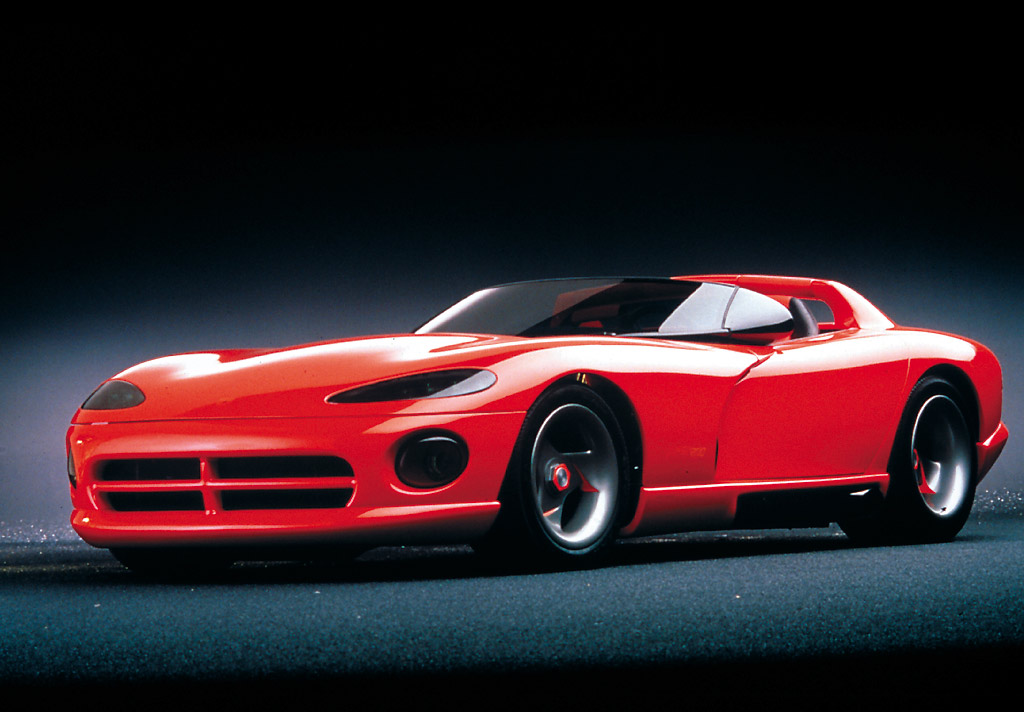
Oct. 22, 2006. 01:00 AM | THE STAR - -Most show cars are created just to give the designers something more entertaining to do than redraw door handles or window switches.But when the Dodge Viper debuted at the Detroit auto show in 1989, primarily as a fun-and-games exercise for then-Chrysler president Bob Lutz and chief designer Tom Gale, the public response was so immediate and so positive that Chrysler had to try and figure out some way to build it, and make a business case for it.Chrysler commissioned its then-subsidiary Lamborghini to cast some of its 8.0-litre V10 truck engines in aluminum for the Viper.

Initially, output was 400 horses, eventually increased to 450, and even more in competition versions.A tube frame and crude truck-based suspension bits were covered in some equally crude but voluptuous plastic body panels.

A flimsy canvas roof kept some of the elements at bay — until it flew off, which it did at about 280 km/h during one European road test.Carroll Shelby, who had done a similar project with the Cobra in the early 1960s, also had a hand in the initial design of the Viper (Cobra; Viper ... geddit?).

He drove a prototype as the pace car for the Indianapolis 500 in May of 1991, and production of the essentially hand-built cars began early the next year, initially at the old Mack Avenue Truck plant, then at a dedicated assembly facility on Connor St. in Detroit.

Chrysler used the Viper as a halo car for Dodge, as a test bed for new materials and as a team-building exercise.A mild refresh in 1996 saw increased power, improved brakes and suspension, and the introduction of the swoopy GTS Coupe. Various higher-performance models were introduced and Viper's competition career flourished.

The current model debuted in 2003. Initially, the motivation was simply to stretch the wheelbase enough to house a proper folding roof. That ride and handling would also benefit were considered bonuses.By the time the designers investigated all the implications, only an all-new design would do. And that's what you see today, without the huge (and prohibitively expensive to repair) clamshell hood and the roll hoop behind the seats.The side exhaust pipes? They're still under there, so don't get too close to the rocker panels.Jim Kenzie

Mercedes-Benz Starts Unique Diesel Marathon From Paris To Beijing

(RTTNews) - DaimlerChrysler(DCX | charts | news | PowerRating) on Saturday revealed that Mercedes-Benz E-Class vehicles powered by clean diesel started on a long-distance journey of over 13,600 kilometres from Paris, France to Beijing, China, where the fleet would arrive on 17 November.

Mercedes-Benz intends to use the diesel marathon across two continents to demonstrate the global potential of its drive technology. Over the course of the five stages, a total of 360 drivers from 35 countries will be seated behind the wheels of the E-Class models, which will cover a combined distance of more than 490,000 kilometres before arriving in the Chinese capital.


Tough times for Chrysler put Newark plant at risk

Jobs safe until '07, but workers starting to worry

Posted Saturday, October 21, 2006


If DaimlerChrysler were to shut down the Newark plant, the closure would be a huge blow to the state's economy. News Journal file/ROBERT CRAIG

Speculation Friday that Chrysler could shut down its Newark assembly plant as part of a cost-saving initiative is a wake-up call for Delaware, business and government leaders said.

The news that the plant could be targeted for closure, first reported by the Wall Street Journal, seemed to reawaken Delaware to the vulnerability of its auto assembly plants in today's fiercely competitive global automobile market.

Chrysler Group officials in Auburn Hills, Mich., said no decision has been reached to shut down any of its plants, although a company spokesman would not rule out the possibility that Newark could be closed as part of the cost-cutting effort.

"Everything is on the table," said Shawn Morgan, senior manager of corporation communications with Chrysler.

Chrysler's deteriorating profit picture and some well-known problems with the plant made the report hard to ignore. Perhaps because of the economic stake Delaware has in the plant, officials took the possibility of closure seriously.

"Everybody needs to help out at all government levels," said Rep. Mike Castle, R-Del., who was governor in December 1992 when General Motors Corp. announced it would close its Boxwood Road assembly plant near Newport in three years. The state mobilized and convinced GM to reverse its decision.

The Newark operation, which makes Dodge Durangos and Chrysler Aspens, employs about 2,100 people in Delaware. If Chrysler were to close the Newark operation, it would be an economic blow to the state, said James A. Wolfe, chief executive of the Delaware State Chamber of Commerce and former plant manager of Chrysler's Newark plant.

Studies have shown that for every $1,000 earned by workers at the plant, $3,000 is generated in the state, he said.

Under the contract with the United Auto Workers, Chrysler can't shut down a plant during the life of the labor contract, Morgan said. The current labor contract runs until September 2007, she said. The plant could be idled, but employees would have some job and income protection, said Roger Kerson, spokesman for the UAW in Detroit.

But Wolfe said "that doesn't mean that the plant can't be targeted for closing." Wolfe said he was sent to the Newark plant in 1992 to "close the place."

Erich Merkle, director of forecasting with IRN Inc., an automotive consulting firm in Grand Rapids, Mich., said it's just a matter of time until Chrysler closes the plant.

"I would be surprised if we don't hear something at the end of this year or early next year," Merkle said. "I think it's a case of when, not if."

Looking at all its options

Chrysler has said it is evaluating all its operations in an effort to trim costs and boost sales under an initiative dubbed Project Refocus. Chrysler Group, the U.S. division of DaimlerChrysler AG in Stuttgart, Germany, began Project Refocus in July after the company announced its third-quarter earnings would fall short. The company has since said it expects a third-quarter loss of $1.5 billion.

Morgan said there's no timetable for when the recommendations from Project Refocus would be announced.

The task at hand for Delaware is to get busy to save the plant, leaders said. For many, the news revived memories from December 1992 and the GM announcement. Then, the plant's closure was averted.

"I know it sounds corny, but we need to focus every day on providing a nurturing environment for job creation and job preservation, especially manufacturing jobs," said Sen. Tom Carper, who, as Delaware's governor, worked for 18 months to save the GM Boxwood Road plant.

Castle said the state needs to dust off the playbook from the early 1990s.

"I don't think things have fundamentally changed," he said.

Wolfe agreed.

"We're not really aggressively fixing those issues that are hurting business. They need to step up to the pump like they did with MBNA and Bank of America," he said.

'Not going away tomorrow'

Catherine Madden, senior analyst with the auto group at Global Insight, an economic forecasting and financial analysis company in Lexington, Mass., said there has been talk in the past that the Newark plant would be closed.

But Madden believes Chrysler is telling the truth when it says no decision has been made.

"From an analyst's perspective, the Durango is not going away tomorrow," she said.

But sport utility vehicles are under tremendous pressure as consumer tastes have changed, she said.

Buyers are showing increasing interest in more fuel-efficient vehicles. Consumers are increasingly attracted to the crossover utility vehicle, like the RAV4 made by Toyota, because it rides more like a car, Madden said.

"The Durango is really under significant pressure with declining sales," she said.

The bad signs

Merkle said he believes Newark will be on the chopping block. The bad signs for the plant include:

•No new products have been announced for Newark (apart from Aspen, which is considered a higher-end Durango).

•No new investment is projected for the plant.

•The Durango and Aspen can be made at the Warren, Mich., truck assembly plant because the Durango shares the same platform as the Dodge Dakota pickup truck.

"The light is flashing red for Newark right now. If Chrysler were to close a plant, Newark is at the top of my list," Merkle said.

According to Merkle, the Newark plant made 109,875 Durangos in 2005. That number is expected to fall to 94,000 Durangos and Aspens in 2006, she said.

At the peak in 1999, the plant was producing 220,000 vehicles a year.

"They're struggling to keep 50 percent production capacity," Merkle said.

Wolfe, who knows intimately the Newark operation, said the plant has other strikes against it when it comes to competing with plants in other states, including the state's gross-receipts tax, strict environmental regulations and the high cost of workers compensation.

If Delaware could remedy some deficiencies at the state level, it could offset larger factors, such as the high cost of health care benefits.

When it comes to a cost comparison with plants in other states, the Newark plant also suffers from being on the East Coast because it raises transportation costs, Wolfe said.

Ninety percent of the parts have to be shipped to the East, he said. He said those factors add $400 to $500 to the cost of each vehicle.

"It's expensive to do business on the East Coast," Wolfe said.

Completed cars have to be shipped again, he said. A large percentage of new car sales are in California, Madden said.

The number of American auto assembly plants on the East Coast has dropped from about 10 in the 1980s to three today, Merkle said.

"And it's going to go to one, and that will be the GM plant in Delaware," Merkle said.

Tapping Hemi Memories, Chrysler Flexes Muscle Again

THEDAY.COM | By Garrett - - Nearly 20 years ago, Barry Washington stumbled across an unusual used car, a 1970 Dodge Challenger T/A. He didn't know much about it, other than that it had cool racing stripes, wild orange paint and a motor born for racing.

He bought the car, though he recalls thinking that the price, $6,500, seemed far too high. So began a new life for the driver and the car, whose value today is comfortably in six figures.

Not only was the Challenger T/A a rare model, it was especially an anomaly where Washington found it, near his home in Ketchikan, Alaska.

Ketchikan is on Revillagigedo Island reachable only by boat. The town doesn't even have a Dodge dealer; the previous owner had brought the car in by ship.

“I drove it around here every day for about three and a half years,” Washington said in an interview. “I did a lot of street racing with it. No one ever caught me.”

Fortunately for his driver's license, that included the local police.

During that time, Washington put 23,000 miles on the car — an amazing feat given that the island has only a few dozen miles of paved roads. The Challenger spent about 15 years outdoors in a town that, on average, has 200 rainy days a year.

About five years ago, Washington found a way to garage his car — not long after he found out how valuable it had become.

Prices for Challenger T/As, along with a whole generation of Challengers and Plymouth Barracudas, have risen exponentially in recent years, particularly since DaimlerChrysler announced in July that it would bring back the Challenger in 2008.

Washington's research revealed that the 1970 Challenger T/A was a racing version of Dodge's belated entry into the muscle car wars. Only 2,518 are known to have been built; Washington knows this because he has become perhaps the top authority on the cars. He now heads the Challenger T/A Registry (challengertaregistry.com) and is the spiritual leader of a group of owners and aficionados seeking to locate T/As or document what happened to all of them. “We're about halfway there,” he said, having cataloged 1,198 as of last week.

As much as the T/A (and the very similar 1970 AAR Plymouth 'Cuda) are worth, they are far from the most valuable of the Chrysler Corporation's original muscle cars.

'The holy grail'

“The holy grail of the muscle car world is the '71 Hemi 'Cuda convertible — just because so few of them were made,” said Steve Davis, vice president of the Barrett-Jackson Auction Company. “That's King Kong. After that, it would be maybe the '70 Hemi 'Cuda convertible, then the hardtop versions of those cars, the 440 “Six Pack' models (with three two-barrel carburetors) and then maybe some of the subsets, like the AAR 'Cudas or Challenger T/As.”

What does Davis mean by holy grail? The current auction record for a '71 Hemi 'Cuda convertible (one of fewer than a dozen made) is “well north of $2 million,” he said. He predicts that this record will be easily and repeatedly broken in January when a bumper crop of Dodge and Plymouth muscle cars go on the block at Barrett-Jackson's big auction in Scottsdale, Ariz.

Galen V. Govier of Eau Claire, Wis., who operates a service that verifies serial numbers, points out that a pristine 1971 Hemi 'Cuda convertible has skyrocketed in value from a range of $15,000 to $25,000 in 1985 to an estimated $3 million this year. Not bad for cars that cost about $5,000 new and were not huge sales successes.

Chrysler enthusiasts like to point out that the company was the first with a pony car — its Plymouth Barracuda was introduced on April Fools' Day, 1964, and was in dealerships a few weeks before the Ford Mustang. But Ford fans scoff, asking how there could have been a pony car before the Mustang, progenitor for the class, even went on sale.

In truth, the Barracuda was a pre-emptive strike; the Mustang's impending arrival was well-known, so Chrysler quickly cobbled together a fastback version of its Valiant compact, adding a huge glass rear window (dubbed the fish tank).

More than a million Mustangs were sold in just 18 months. Total Barracuda sales over 11 years never topped 400,000. (Its later-arriving cousin, the Challenger, accounted for 200,000 more.)

Not until the 1970 model year did Chrysler come up with fresh ground-up designs for pony/muscle cars, and by then the era was winding down. Within four years, Chrysler decided to discontinue them.

Yet their lack of marketplace success has helped to make Barracudas and Challengers coveted collectibles. In particular, the high values of Hemi-engine models reflect their scarcity when new. Hemis sold poorly partly because the engine cost nearly $900 extra and partly because buying insurance ranged from expensive to impossible.

Relatively few Barracudas or Challengers came with big V-8s; many had 6-cylinder engines. A cottage industry has evolved of people who convert cars with 6s and small V-8s into valuable big-block models. Hence the need for services like Govier's and Washington's, who verify the original equipment from serial numbers and documents.

The first Barracudas were powered by 6-cylinder motors or small 273-cubic-inch V-8s. In 1967, a better-defined model appeared, styled with more elan than the dowdy Valiant but still sharing the same unexciting engines. Barracudas from this era are worth little more than nice Valiants, perhaps $5,000 in showroom condition.

In 1970,Chrysler finally caught up as the Challenger joined the sexy new Barracuda. Each came in six styles with nine engine choices, including the race-ready 340 V-8 in Washington's car, a big-block 426-cubic-inch Hemi and even the huge 440.

Chrysler sold 83,032 Challengers in 1970, helping to lift Dodge's market share to 7 percent, its highest ever, and Plymouth sold a record 55,499 Barracudas. But sales tumbled the next year as the novelty wore off. A lackluster '72 redesign and the elimination of big V-8's drove sales lower. By 1974, the fat lady was on her last chorus.

The cars had already earned a spot in pop culture. The Challenger was a star in films from “Vanishing Point” (1971) to “2 Fast 2 Furious” (2003). While the Barracuda had a cleaner, classier design, resurrecting that nameplate would have been problematic, given that Chrysler phased out the Plymouth division four years ago.

Instead, Dodge unveiled a design study for a reborn Challenger at the Detroit auto show last January. By summer the car had a green light for production. “We hadn't seen this kind of spontaneous, passionate response to a car since the introduction of the Viper concept in 1989,” Thomas W. LaSorda, president of the Chrysler Group, said.

The only question is whether 2008 will be too late to take advantage of the muscle car renaissance — or will the Challenger be late, once again, to the muscle car party?

Mercedes-Benz B-Class Scores Top Result in Euro NCAP Crash Test

Stuttgart, Oct 20, 2006 -- The Mercedes-Benz B-Class has passed crash tests performed in accordance with the European NCAP (New Car Assessment Program) rating system with flying colours, receiving the maximum number of five stars from the independent examiners. Thus, the sandwich safety concept developed and patented by Mercedes-Benz, which has already proven itself on countless occasions since its launch in 1997, has demonstrated its effectiveness once again.Thanks to the sandwich concept, the Mercedes-Benz B-Class occupies an exceptional position among its segment. The arrangement of the engine and transmission in a tilted position partly in front of and partly under the passenger compartment means the Compact Sports Tourer offers a larger front crumple zone than other passenger cars in its class. In a serious head-on crash the drive system unit does not move in the direction of the interior, but slides down the pedal floor panel, which also slopes downwards. This means the occupants sit around 200 millimetres higher and thus above the impact zone – an advantage in the case of a side impact. At the same time, the intelligent sandwich principle makes it possible to offer generous interior dimensions with compact external measurements. The B-class thus offers both typical Mercedes occupant safety and exceptional spaciousness and comfort.

Several further measures contribute to the exemplary safety performance of the Compact Sport Tourer from Stuttgart, for example, a body structure made from extremely firm steel alloys with innovative adhesive joints, which provide the front-end structure of the Mercedes-Benz B-Class with consistently high deformation resistance during the entire crash phase, thereby reducing the loads on the occupants.

The engineering of the interior restraint systems also meets the high standard of Mercedes-Benz top models. Adaptive, two-stage front airbags, belt tensioners for the front and outer rear seats, adaptive belt force limiters at the front, active front head restraints, ISOFIX child’s seat attachments and newly developed head/thorax front side airbags round off the standard protective system for occupants.

However, the Mercedes-Benz B-Class not only meets, it also surpasses standard crash test requirements. The Stuttgart-based automobile brand defines vehicle safety based on an analysis of actual accident occurrences as part of an integrated approach. In addition to occupant protection tailored to suit the severity of the accident, this involves ensuring the quickest possible rescue of the occupants following a collision and the avoidance of accidents using electronic assistance systems such as ESP® and the braking assistant (BAS). For example, in critical road-holding situations, the Mercedes-Benz B-Class electronic stability program (ESP®) works together with the electro-mechanical servo steering to adapt the servo support to assist the driver in stabilizing the car. This extra ESP® function also aids steering correction and provides the car driver with an even better road feel when braking on different road surfaces. An analysis of official German accident statistics bears witness to the significant contribution the braking assistant, which was first launched by Mercedes-Benz ten years ago, makes to avoiding road accidents – in rear-end collisions the use of standard braking systems in Mercedes passenger cars reduced the accident rate by eight percent, while the percentage of serious pedestrian accidents fell by as much as 13 percent.

The high safety standard of the B-Class combined with ample space, exemplary comfort, fascinating design and intelligent variability has quickly established the Mercedes-Benz trendsetter as a successful model. More than 150,000 B-Class models have been delivered since the car’s market launch in June 2005.

Volvo and DaimlerChrysler Get Smart


Updated: 6:06 a.m. PT Oct 20, 2006 - - Volvo (Nasdaq: VOLV) and DaimlerChrysler(NYSE: DCX), along with the automotive-component giant Bosch, recently announced that a consortium they belong to received $30 million from the European Commission to spur the development of an "intelligent" car.

The consortium, which goes by the techno-laden name of Dynamically Self-Configuring Automotive Systems, will use the funds to design an automobile that, among other things, can self-diagnose and fix its own faults, upgrade its own computer software programs, and interface among a drivers' cell phone, personal computer, and satellite navigation system.

I believe it's less important that the consortium received the money and more insightful to know that Volvo and DaimlerChrysler are aggressively pursuing technological advances. Moves of this sort will allow the two companies to keep pace with, and possibly surpass, competitors such as Toyota (NYE: TM), Honda(NYSE: HMC), General Motors(NYSE: GM), and Ford(NYSE: F).

For instance, self-diagnostic technology could significantly cut down on operator-maintenance costs by allowing customers to identify problems before they arise and become major expenses. Similarly, new wireless technology could allow consumers to receive software upgrades via Wi-Fi hot spots without their ever knowing about it.

Such an advancement doesn't sound that special until one considers a few things: It will save the owner a trip to the dealership to receive the new program, and if the program helps the car run more efficiently, it could increase the car's performance and save the owner some nice money.

It is, however, the interface among the automobile, mobile devices, and satellite system that I believe offers the most value. Such a system has the potential to provide consumers with an almost unprecedented level of convenience.

Among the things such a system could do is take a voice command like "Take to me Joe's house" from its owner. The system would automatically download Joe's address from a PDA and, without the need for anybody to enter any coordinates, direct the driver to the destination. Another useful application would be to use such a system to avoid traffic jams and find the quickest and most efficient way to get from one point to another.

If the consortium can succeed in making a smarter car, it could also make Volvo and DaimlerChrysler more attractive long-term investments.

Cummins Achieves Major Milestone - Produces 1.5-Millionth Cummins Turbo Diesel for Dodge

COLUMBUS, Ind. (Oct 19, 2006) - Cummins Inc. (NYSE:CMI) celebrated a key milestone with the shipment of the 1.5-millionth Cummins Turbo Diesel at its MidRange Engine Plant, signifying both the growing popularity for diesels in the automotive market and the Cummins Turbo Diesel."Producing 1.5 million Cummins Turbo Diesel engines over the past 18 years is an incredible milestone for Cummins. It demonstrates that the American truck buyer not only recognizes the benefits of diesel technology but also believes in the proven performance of the Cummins Turbo Diesel. As fuel prices increase, we expect demand to continue to grow. Cummins is poised to meet the growing demand," said Dave Crompton, Vice President - MidRange Engine Business.

With an average fuel savings of up to 40 percent, diesel is the most efficient internal combustion engine in the world - delivering more miles per gallon than a comparable gasoline engine. According to a recent study by J.D. Power and Associates, diesel cars, trucks and SUVs are expected to grow from 3 percent market share in 2004 to 7.5 percent by 2012.

Technologies such as a high pressure common rail fuel system and Cummins full-authority electronic controls provide superior performance and sociability for operators while reducing emissions levels. With the implementation of low-sulfur diesel fuels in 2007, emissions will be reduced even further.

L.A. Auto Show right around the bend

"15 cars set to make their worldwide debu"

The Los Angeles Auto Show's "A New Beginning" opens Friday, Dec. 1. It will offer a first look at more than 1,000 of the newest automobiles, including 15 cars making their worldwide debut.

From fuel-efficient hybrids, pickups, luxury sedans, SUVs, powerful sports cars and exotic super cars consumers can explore a full range of vehicles to suit every interest and need.

Consumers can also take a sneak peek at vehicles of the future, with several concept cars on display.

This year's theme emphasizes vehicles that will be environmentally sustainable and will reduce their global footprints.

Guests can expect a variety of activities and sights for adults and children alike.

The show will run through Dec. 10. The hours are Fridays, 11 a.m. to 10:30 p.m.; Saturdays 9 a.m. to 10 p.m.; Sundays 9 a.m. to 8 p.m., and Mondays through Thursdays 11 a.m. to 10 p.m.

The show will be at the Los Angeles Convention Center, 1201 S. Figueroa St. in L.A.

Admission is adults $10, seniors (65 and older) $7 on weekdays, children under 12 free (when accompanied by adult).

Parking is $10 for self-parking at the Convention Center, $25 for valet parking at the Convention Center and $8 for parking at the Grand Avenue parking structure, with a free shuttle on weekends.

For more information, go to www.LAautoshow.com